KX:1 · Performance Lab
Lab cycle 04 · E
E
Active module
Environment
What is the setting enabling — or suppressing?
Model navigator
One equation.
Seven rooms.
P(t) = C(t) · M · E · f(D/C) · (1−i)
P(t)
01The Moment
Where performance actually happens.
Enter room
C(t)
02Capability Now
What is currently available for this task?
Enter room
M
03Motivation
What makes action move?
Enter room
E
04Environment
What is the setting enabling or suppressing?
Open now
f(D/C)
05Challenge Fit
Does the challenge fit?
Enter room
(1−i)
06Interference
What is consuming access?
Enter room
X
07Expression
How much of what is available actually arrives?
Enter room
Active Module
E
E
Conditions before conclusions.
What is the setting enabling — or suppressing?
Performance never happens in isolation.
There is always a room. An audience. A system. A set of expectations.
A level of noise. A relationship. A consequence. A culture.
A moment in which the person has to perform.
Sometimes those conditions barely register. Sometimes they become part of the performance itself.
Same person.
Different conditions.
Different performance.
The interesting question is not whether an environment is simply “good” or “bad”. It is: what does this environment change?
Watch / Lab Demonstration
02
Same person. Different room.
Ross Neal Pressure Demonstration
Ross asks an audience who believes they perform well under pressure. Hands go up.
He then asks for a volunteer. Some hands begin to disappear.
One person comes forward. The audience applauds. Ross places a small ball in the volunteer’s hand, creating an expectation that the task may be physical.
Then comes the countdown.
3.
2.
1.
The instruction changes: sing the chorus of any song.
The volunteer freezes.
This is used as an observation. It does not prove causality, diagnose anxiety, or establish a trait inside the volunteer.
Official post · embedded where supported
Same person.
Different room.
If TikTok blocks embedded playback in the preview or on a device, the original post opens from here.
Creator credit: Ross Neal. KX:1 does not imply endorsement.
Interactive Questions
03
What changed?
Reveal each question slowly. The point is not to reach a verdict. It is to notice the conditions.
The capability did not obviously vanish when he walked to the front of the room.
What changed was the environment in which it had to arrive.
Environment is not background.
It can become part of the performance itself.
Evidence
04
When Being Watched Changes the Task
Being observed, evaluated or socially exposed can change what a task feels like.
Laboratory research on social-evaluative threat often uses situations such as public speaking, mental arithmetic and judgement by an audience. These conditions can produce measurable stress responses.
But the effect on performance is not always in one direction.
Research on social context and social facilitation shows that the presence or evaluation of other people can sometimes improve performance and sometimes impair it.
That is important.
The KX:1 question is not
Is pressure bad?
It is
What does this condition do to this person, on this task, now?
Field Note · Human Field Note
Same Presentation. Different Room.
You know the material.
You rehearsed it yesterday.
With one colleague, you were fluent.
Today:
ten people are watching
the most senior person in the room is present
the laptop will not connect
somebody interrupts your first sentence
the clock is visible
the meeting is running late
What happened to your knowledge in those ninety seconds?
Probably very little.
But almost everything about the environment changed.
Capability may be stable while access to it changes.
This is not a universal causal law. It is a reason to look before judging.
Idea / Visual Comparison
06
The Map Is Not the Territory
A useful map can distort reality and still help you navigate it.
Before Harry Beck’s diagram, Underground maps placed greater emphasis on geography and distance.
Beck approached the problem differently. As an engineering draughtsman, he simplified the network into a clearer diagram built around connections, lines and interchange rather than geographic fidelity.
The design was initially considered radical. Its usefulness came partly from what it chose not to represent accurately.
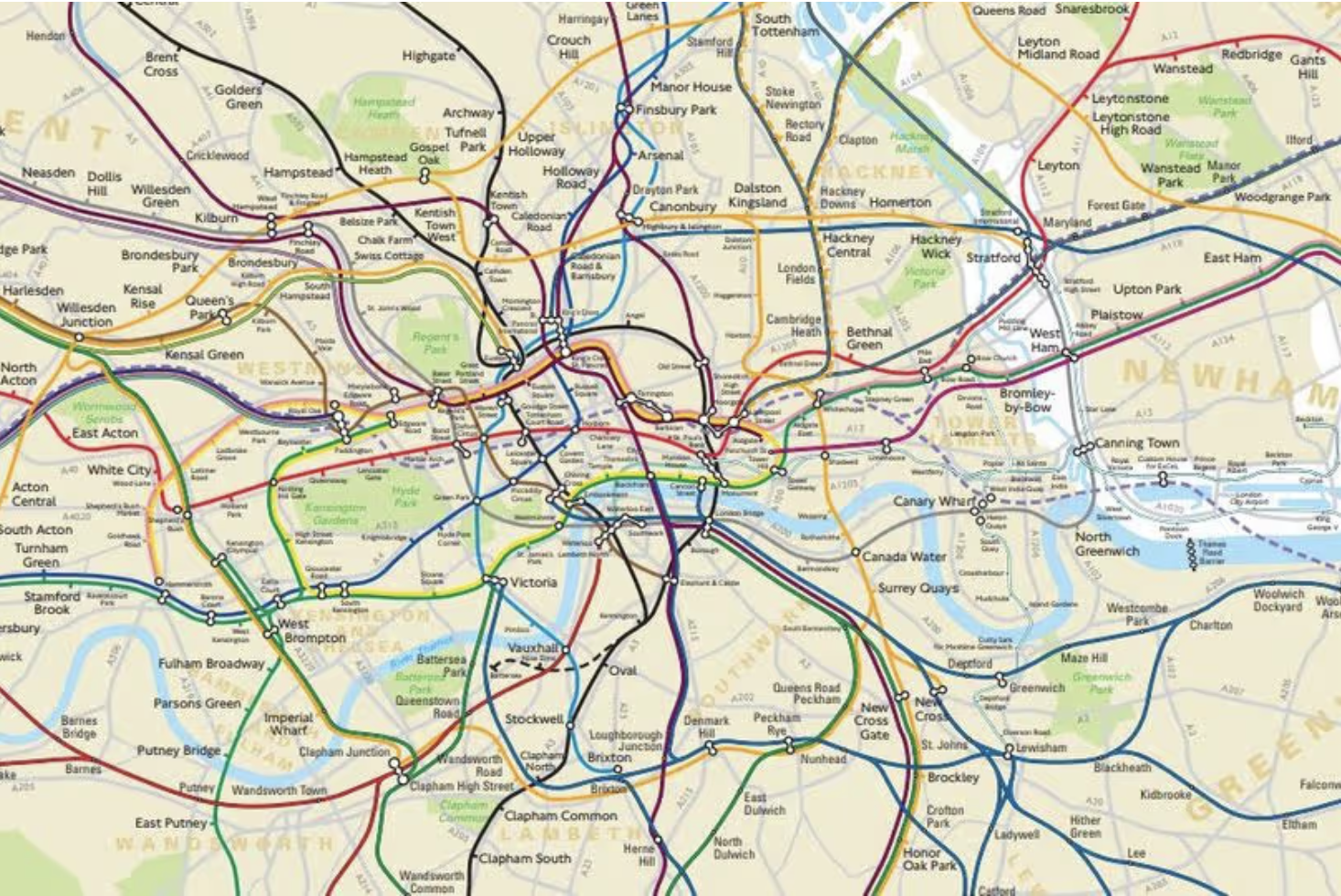
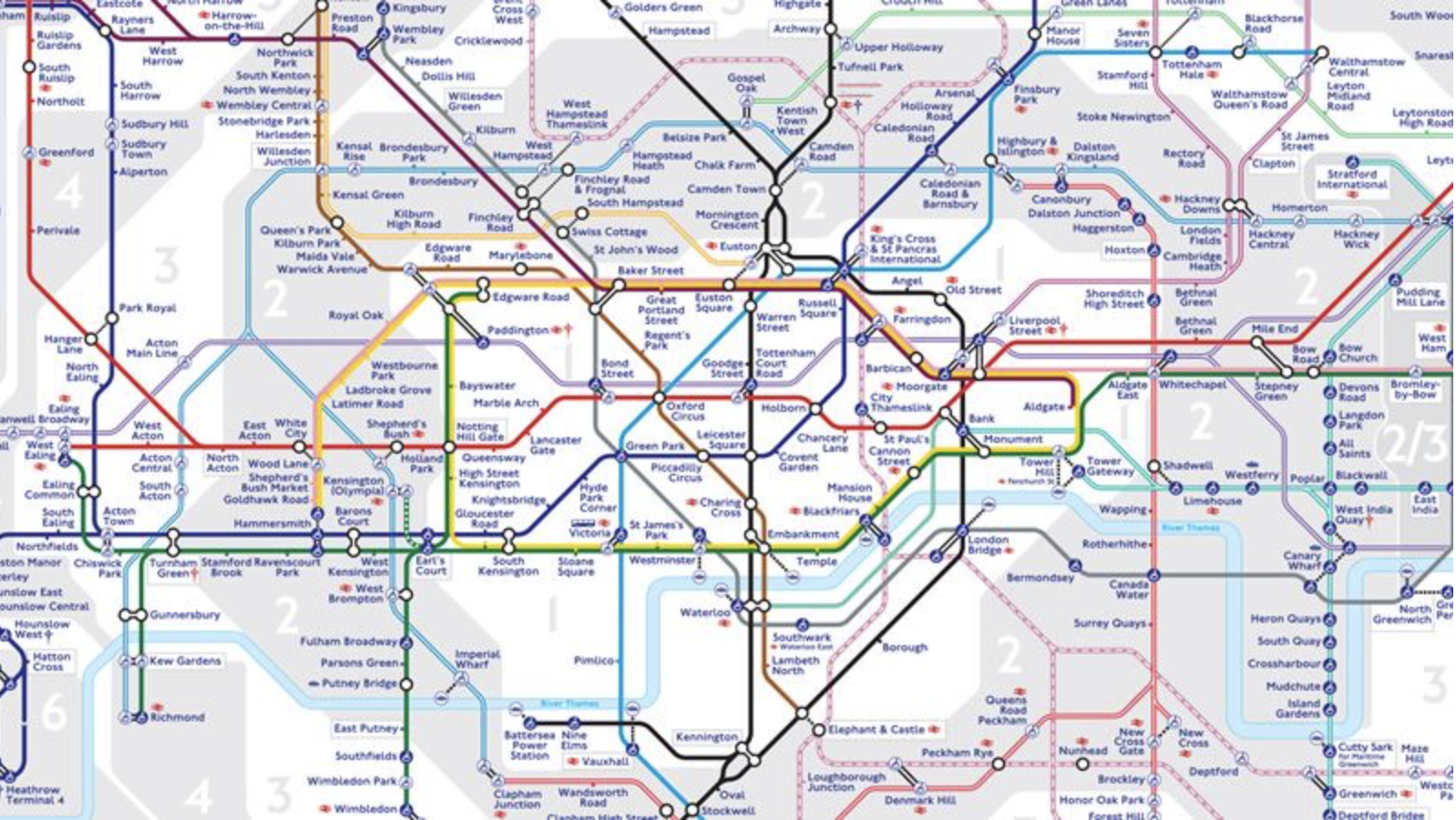
Which map is more accurate?
It depends what you are trying to do.
One representation preserves geography.
Another prioritises navigability.
Neither contains the entire territory.
TfL itself has noted that the Tube diagram is highly effective for navigating the rail system but inadequate for some other purposes such as pedestrian wayfinding.
Map images supplied for this comparison. London Underground map design and associated rights remain with their respective owners; no TfL endorsement is implied.
Lab Note
07
Our Model Is a Map Too
P = C × X is a model.
It helps organise where to look when performance changes.
It is not a complete description of a human being.
The deeper Burns–Lear formulation is also a map.
Useful models simplify. That is part of their value.
It is also why they should never be confused with the territory itself.
The model should help us navigate.
It should never pretend to contain the whole person.
Explainer
08
What Counts as Environment?
01Physical
- · space
- · temperature
- · noise
- · layout
- · equipment
- · lighting
02Social
- · audience
- · relationships
- · status
- · team norms
- · trust
- · evaluation
03Organisational
- · rules
- · incentives
- · role clarity
- · processes
- · leadership
- · workload
04Informational
- · instructions
- · feedback
- · ambiguity
- · time pressure
- · available data
05Cultural
- · what is rewarded
- · what is punished
- · what can be questioned
- · what can be admitted
06Digital
- · notifications
- · interfaces
- · latency
- · visibility
- · surveillance
- · remote communication
The environment is the set of conditions in which performance has to arrive.
This does not mean every factor matters equally. It means the setting is part of the investigation.
Evidence
09
Can I Say What I See?
Amy Edmondson’s work on psychological safety concerns whether people believe it is interpersonally safe to speak up, ask questions, admit mistakes, raise concerns and offer ideas.
It is not the same as being nice.
It is not the same as removing standards.
A team can have high standards and still make it safer to surface information.
speak up
ask questions
admit mistakes
raise concerns
offer ideas
What capability never arrives because somebody does not feel able to speak?
Evidence
10
The Audience Changes Something
increase arousal
increase effort
sharpen attention
create distraction
increase self-monitoring
alter risk-taking
facilitate some tasks
inhibit others
The response depends on
The presence of other people does not automatically make us better or worse.
It changes the performance conditions.
Experiment
11
Change the Room
Change one condition. Then compare.
Choose one recurring performance problem.
Before changing the person, change one environmental condition.
Do not change five things. Change one.
Observe what happens.
reduce the audience
increase the audience
speak earlier in the meeting
rehearse in the actual room
remove the slides
change who gives feedback
turn notifications off
clarify the task beforehand
move from public feedback to private feedback
alter the order
reduce one source of interruption
change the time of day
change where people sit
provide the question in advance
Practice Note
12
Move One Dial
This is the environmental version of Move One Dial.
The aim is not to redesign the person.
It is to test whether changing one credible condition changes what becomes possible.
If performance shifts when the condition shifts, you have learned something.
Not necessarily why. But where to look next.
Lab Note
13
The Room Is Not Always the Answer Either
Sometimes capability is missing.
Sometimes motivation is low.
Sometimes demand is poorly matched.
Sometimes interference is high.
Sometimes the person simply made an error.
The purpose of E is not to blame the room.
It is to stop pretending the room is irrelevant.
Environment is a variable.
Not an excuse.
Evidence
14
The Research Shelf
Environment, evaluation and social context.
Source 01 · Systematic reviewSocial Context and Performance
Social context and cognitive / motor behaviour.
Reviews how social context has been studied across cognitive and motor behaviour. Useful here because social presence does not produce one simple performance effect.
Read the sourceSource 02 · Open-access reviewSocial-Evaluative Threat
Observation, evaluation and stress responses.
Summarises research on situations where people may feel judged or socially exposed. It supports cautious questioning, not a diagnosis of any individual response.
Read the sourceSource 03 · Review of social-evaluative threatTrier Social Stress Test
Public speaking, mental arithmetic and evaluative conditions.
Describes a widely used laboratory stress protocol involving social evaluation. It is relevant to how being watched can change the conditions of a task.
Read the sourceSource 04 · Research articleEvaluation and Performance
Evaluation effects under specific task conditions.
Examines how evaluation can shape performance. The important point for KX:1 is that the effect depends on task, person and context.
Read the sourceSource 05 · Classic paperEvaluation Apprehension / Social Facilitation
Audience effects and evaluation apprehension.
A historical source in the study of social facilitation and evaluation. It is best read as part of a broader evidence base, not as a complete answer.
Read the sourceSource 06 · Official TfL sourceTransport for London
Harry Beck’s Tube map.
TfL’s official account of Harry Beck’s diagrammatic approach and why simplifying geography changed the usefulness of the map.
Read the sourceSource 07 · Official TfL informationTfL Geographic Connections Map Information
Geographic representations and map purpose.
TfL information connected to geographically anchored rail-network representation. It helps distinguish navigability from geographic fidelity.
Read the sourceThese sources inform the questions in this room. They are not presented as validation of the Burns–Lear model.
Closing E
Change the conditions. Watch what changes.
A performance problem can look like a person problem.
Sometimes it is.
Sometimes the room is doing more work than we realise.
Once we understand what capability is available, what is motivating action, and what environment surrounds it, another question becomes possible:
Is the demand right for this person now?
Next in the Performance Lab
f(D/C)
Challenge Fit
When does difficulty help — and when does it begin to suppress performance?
Enter the room