

High expression · favourable outcome
A well-prepared athlete executes and wins.

Performance Lab · Room 07
Lab cycle 07 · X
X
Available capability meets the conditions of a real moment.
The Arrival
How much of what was available actually arrived?
Model navigator
P(t) = C(t) · M · E · f(D/C) · (1−i)
P(t)
01The Moment
Where performance actually happens.
Enter room
C(t)
02Capability Now
What is currently available for this task?
Enter room
M
03Motivation
What makes action move?
Enter room
E
04Environment
What is the setting enabling or suppressing?
Enter room
f(D/C)
05Challenge Fit
Does the challenge fit?
Enter room
(1−i)
06Interference
What is consuming access?
Enter room
X
07Expression
How much of what is available actually arrives?
Open now
Active Module
X
You cannot see capability directly.
You see what a person says. What they do. What they decide. What they create. What they avoid. What they complete.
Performance gives us evidence. But the evidence is never the whole person.
Expression is the bridge between them.
The Arrival · When more arrives
01
Observation Before Interpretation
02
A winning putt drops. A final note resolves. A spacecraft lands. A prize is awarded. An audience stands.
The moment may show exceptional expression, substantial expression of capability, or an unusually complete arrival under the conditions visible to us.
It does not give direct access to a person’s absolute maximum capability.
What the event provides
An event. Observable behaviour. A performance. An outcome. A moment of evidence.
Not a complete inventory.
These are not demonstrations that the whole person arrived. They are moments in which something exceptional became visible.
Performance Stories
03
Each story separates what happened, what became observable, what remained hidden and what the evidence can legitimately support.
The event
In 2011, a four-shot final-round lead unravelled. In 2025, with the career Grand Slam still incomplete, McIlroy recovered from mistakes, missed at the 18th in regulation, then reached close on the first play-off hole and made the winning birdie. He became the sixth man to complete the modern career Grand Slam.
What was observable
Decision, recovery, execution and response to changing demands became visible.
What remained hidden
Neither round revealed a complete inventory of his capability, preparation or internal experience.
What happened next
One ended in defeat. The later moment ended in a Masters victory.
Official video · The Masters
Which capability may have existed in both years?
What changed across fourteen years?
What may have changed in motivation, environment, fit and interference?
Does either result establish his limit?
One moment can produce powerful evidence. A later moment can change the interpretation.
The event
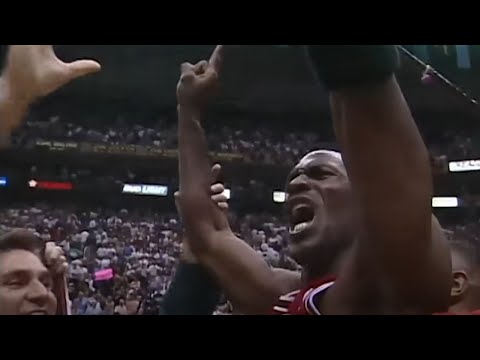
Game 6 of the 1998 NBA Finals offers an observable sequence before the result: defensive awareness, anticipation, possession, pace, creation of space, balance, execution and follow-through.
What was observable
A practised action remained responsive to a live opponent and a changing clock.
What remained hidden
The footage cannot show every perception, intention or alternative available in the moment.
What happened next
The shot fell and the championship followed.
Official video · NBA
What was the defined task?
What appears practised, and what required live judgement?
What would remain true if the shot had missed?
Are expression quality and outcome identical?
Outcome is what followed. Expression is what became usable in the action.
The event
A performance of Bach by Yo-Yo Ma has no scoreboard or opponent. Technical capability, memory, timing, sensory information, interpretation and adaptation become observable in real time.
What was observable
Precision, phrasing, timing and response to sound become available to an audience.
What remained hidden
Years of preparation and moment-to-moment experience remain largely out of view.
What happened next
The performance becomes an artistic event rather than a win or loss.
Official video · YoYoMaVEVO
What is directly observable?
What preparation has become fluent enough to disappear?
What must remain responsive?
Does expression require competition?
Expression can be precise without becoming mechanical. Fluency is capability organised for use.
The event
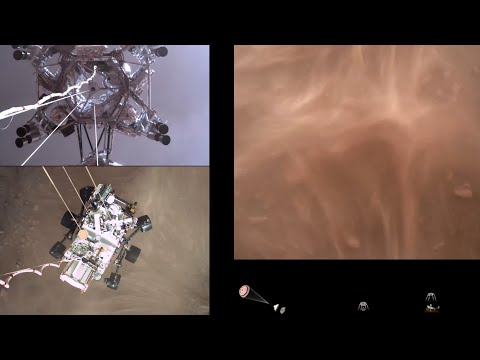
The Perseverance landing depended on engineering, simulation, role clarity, communication, procedural discipline, adaptation and coordination distributed across a system.
What was observable
Mission-control communication and the eventual confirmation made part of a coordinated performance visible.
What remained hidden
The celebration conceals years of distributed work and the contributions of people outside the camera frame.
What happened next
The rover landed on Mars and the room celebrated.
Official video · NASA
Can capability belong to a team or system?
Where did individual capability become coordinated expression?
How did the environment support delivery?
What does the celebration conceal?
Sometimes the relevant unit of expression is not the individual. It is the coordinated system.
The event
Investigation, experiment, reporting, revision, failed attempts and published work happen before a prize announcement or ceremony.
What was observable
The output can be examined before any public acknowledgement arrives.
What remained hidden
Much of the judgement, persistence and revision behind the work remains unseen.
What happened next
A committee later recognises and values an earlier output.
Where did the relevant expression occur?
What output was evaluated?
Which capability remained invisible?
Would the work become less capable without the award?
Recognition is evidence that an output was valued. It is not the output itself.
The event
Someone returns to work after a long absence, raises a concern where silence feels safer, begins despite visible nerves, says no, says yes, or begins again.
What was observable
A consequential action occurs in a defined human moment.
What remained hidden
There may be no recording, result table, expert commentary or crowd.
What happened next
The action may change only one conversation, one relationship or one next step.
What did the moment ask for?
What became visible?
What might still have remained inaccessible?
Who decides whether this performance mattered?
The size of the audience does not determine the significance of the expression.
Keep the Distinction Clean
04
Outcomes matter. They are simply not a pure measurement of the capability that produced them.
A well-prepared athlete executes and wins.
A leader delivers a clear, evidence-based proposal; the organisation rejects it for reasons beyond their control.
A poorly delivered proposal succeeds because the customer had effectively decided beforehand.
A prepared speaker consumed by internal monitoring cannot communicate the central argument.
Outcome tells us what happened next. Expression asks what arrived from the person or system.
A Working Language
05
01
but largely unexpressed
02
expressed
03
expressed
04
expressed for this moment
Fully expressed for this moment means relevant capability appeared sufficiently accessible for this task and these conditions. It does not mean human perfection, complete potential or an absolute personal limit. This continuum is not a scored psychometric scale and assigns no percentage.
Reflection Tools · One place
06
Compare two settings, test the difference between an observation and a verdict, then bring all seven rooms into one Arrival Profile.
The Assessment Problem
07
Capability cannot be observed directly. It is often inferred from performance. When conditions narrow expression, an observer may conclude that the underlying capability is absent.
What capability might the interview conditions suppress?
What does this examination reveal—and what remains untested?
Does selection evidence equal a person's limit?
Was judgement absent, or did the room make expression costly?
What useful information never entered the system?
Has capability disappeared, or has the arena changed?
What remains unexpressed cannot contribute—and may never be recognised as having existed.
Research Cabinet
10
No single research tradition defines Expression in the precise Burns–Lear sense. These traditions offer distinctions among behaviour, output, effectiveness, effort, adaptation and performance variability.
Contribution
Performance can be distinguished from the outcomes or effectiveness that follow it.
Qualification
Outcomes still matter; they are not a pure measure of the behaviour or capability that produced them.
Contribution
Typical performance and performance under conditions intended to elicit best effort should not be treated as identical.
Qualification
Maximum-performance conditions do not reveal an absolute human limit.
Contribution
Task, contextual, adaptive and counterproductive behaviour show why performance cannot always be represented by one result.
Qualification
A taxonomy does not convert Expression into a single score.
Contribution
Adaptation includes responding to novelty, uncertainty, changing demands and emergent problems.
Qualification
Adaptability is one dimension of performance, not the whole of Expression.
Contribution
People may hold useful information or judgement without expressing it when interpersonal contribution appears costly.
Qualification
Psychological safety does not explain every silence or instance of reduced participation.
Contribution
Performance can vary within the same person across tasks, occasions and short timeframes.
Qualification
Variation does not prove a particular cause and should not become a judgement about character.
The cited researchers did not create, endorse or validate the Burns–Lear model. Their work is presented because it offers distinctions and evidence relevant to the questions explored here. Expression, as defined in this Lab, is a Burns–Lear organising construct.
Conceptual Boundary · X is not magic
11
confidence
motivation
talent
personality
luck
charisma
everything unexplained
an innate X factor
X is an organising construct describing how conditions influence the expression of currently available capability.
X is not the mystery in the equation. It is the part of performance we too often collapse into judgement.
The Complete Picture
12
P(t)=C(t)·M·E·f(D/C)·(1−i)
X(t)=M·E·f(D/C)·(1−i)
P=C×X
The short equation distinguishes what is available from how much arrives.
The expanded formulation asks where to investigate when expression changes. These formulations organise enquiry; they are not validated universal calculations, and the variables should not receive arbitrary numerical values without appropriate definitions and evidence.
Performance is capability expressed through the conditions of a real moment.
The Return · Augusta, again
13
2011 produced one piece of evidence. 2025 produced another.
The person changed across fourteen years. Capability developed. Experience accumulated. Conditions shifted. The meaning of the moment changed.
The collapse mattered. The victory mattered. Neither moment was the whole person.
What changes when we stop asking, “Who is this person?” and begin by asking, “What happened to expression here?”
Closing · X
14
A performance can win a final, lose a contract, change a career, repair or end a relationship, or begin another.
Even an important performance remains an event produced by a person or system, performing a task, under conditions, at a moment in time.
The event deserves examination. The person deserves more than a verdict.
You located the moment.
You examined what was available.
You asked what moved it.
You studied the setting.
You tested the fit.
You looked for the interference.
You considered what became visible.
How much arrived?
Performance is visible. Capability is not. Expression is the bridge between them.
The Seven Rooms
The Lab does not end with an answer. It ends with a better question. Change one condition. Repeat where appropriate. Observe again. Resist the verdict.